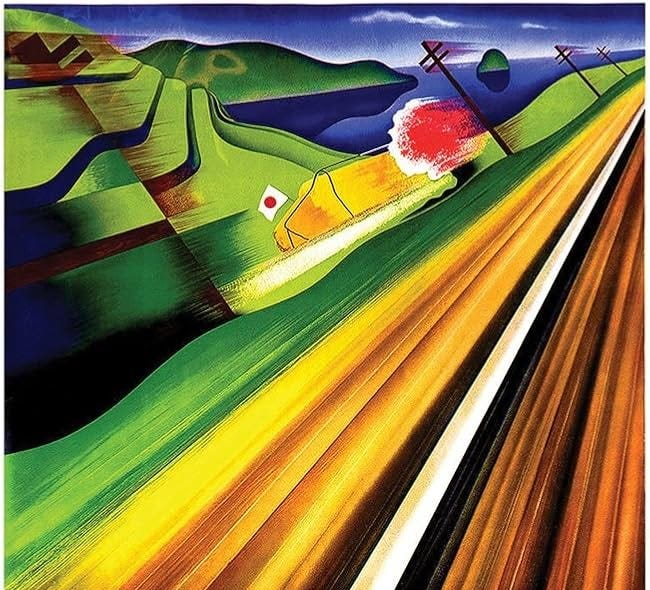
on the crime fiction of seicho matsumoto (1909-1992)
Two dead bodies are found resting side-by-side on a beach. The initial investigation wrongly assumes it to be a lovers' suicide pact. The true cause of death however won't be found through physical evidence or witness testimony, but instead through deep immersion in the logic of railway timetables.
A detective is awoken to news of an unidentifiable body dumped at dawn in a suburban train depot. Who is it and how did they get there? The answer will require a thorough analysis of linguistic maps of Japan.
A murderer is trying to cover up his tracks? Let's delve into the structure of government agricultural support schemes.
A suspected life insurance scam? Now it's time to learn about the specific differences in how clutches are designed on each car model.
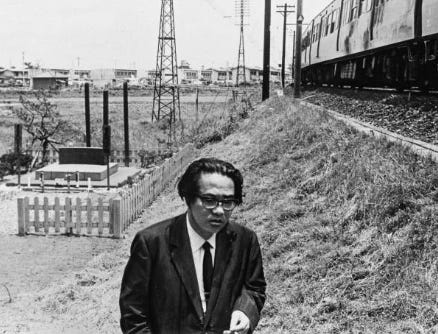
This almost comic commitment to the fundamental importance of banal detail is the subject of the works of Seicho Matsumoto, Japan's best-selling crime novelist. Well certainly that is the most immediately obvious subject of him in his English translations. A museum dedicated to his life and work in Kitakyushu, a small city in the south of Japan and where he spent the first half of his life, tells us he published 700 works across novels, short stories, essays and histories. Like the great post-war French crime writer Georges Simenon, the volume of his output is almost incomprehensibly large, with Matsumoto sometimes serialising five crime stories simultaneously across different magazines. His obituaries discuss his wanderings into political thrillers and espionage novels, archaeological studies of ancient Japanese history and contemporary accounts of the 1979 Revolution in Iran. We have none of them in English. The absence of his "Black and Fog" series, in which Matsumoto apparently weaves together retellings of every major unsolved mystery in Japan over the preceding decade into a grand conspiracy thriller proposing that they were all perpetrated by a cabal of secret American agents feels like an especially sad loss.
Instead we are limited to translations of a small range of his early works from the late fifties and early sixties: Tokyo Express (1958), Point Zero (1959), Pro Bono (1961), Inspector Imanishi Investigates (1961), A Quiet Place (1971), Suspicion (1982) and a short story collection called The Voice (1959-1965). The efforts of five different translators, ranging from the excellent (Louise Heal Kawai) to the 'how did this get published?' (Andrew Clare), at least allows you to get a more stable sense of his style from their shared commonalities. But outside of that we are left to generalise from a limited sample size, with little sense of whether it is truly representative. Even within what we have, we are on unsteady ground: the English translation of Inspector Imanishi Investigates, for me the finest of the eight, was condensed from 760 pages to just over 300.
It's low-hanging fruit to pick on the cover quotes of books, but with Matsumoto it's hard not to be struck by how little they seem to relate to what you encounter on the page. Replete with references to how he shocked and scandalized with his subject matter while saluting his supposed Hitchcockian mastery of suspense and twists. My first novel of his was Tokyo Express and I was left bemused by this, primed for an entirely different novel to what I eventually read. While I was amused by the novelty of the railway timetable plot, it seemed to lack any real tension or atmosphere while being populated with thin characters. The story is resolved by an overwhelming rush of events in the final chapter then the book abruptly ends. Yet within a year of this experience I had come to read everything published in English of his. There must be something drawing me into his work. Perhaps in examining what that illusory something evidently wasn't I would find a clue to what it was.
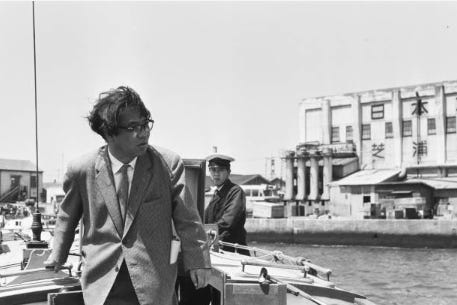
Matsumoto was best known for moving away from supernatural stories and puzzle mysteries and establishing the 'social detective' genre in Japan. His books certainly tackle a wide range of issues in its post-war society, from collusion between business and government, treatment of sex-workers, the culture of over-work, gambling addiction, inequalities in access to justice, the destruction of administrative records during WW2, the failures of the press, and the pernicious influence of American ideas. Reading in 2026 however an author simply engaging with these issues is much less scandalous than it must have been in the 1950s. A detective novel where the real subject is the broader social failings revealed through the investigation has become a well-worn genre for contemporary readers.
His approaches to many of these issues also have a strange sense of someone trying to be progressive within an unfamiliarly alien framework of mid-century Japanese conservatism, often pushing you away from his social approach when you feel like you should be with it. There's also his relative bloodlessness which creates an odd sense of detachment for the reader, as if he is decorously standing away from the grisly events his murder plots revolve around. His attitude to the emotional context of his work is similarly treated with a sense of unvoiced embarrassment. Recognisable grief or anguish is barely expressed by the victims of his stories. Often a murder's alibi will be logically unravelled and the story will simply end, totally uninterested in the emotional stakes of them being caught, the aftermath treated as an irrelevance.
Matsumoto saw his own work in strangely grandiose terms, feeling that he was drawing crime writing towards the principles established by Dostoevsky. Pro Bono even contains direct tribute to Crime and Punishment in its tale of a murdered moneylender. In an interview he said "To know motives is very important in this day and age, and to show psychological reasons for crime makes a book literature". Later he would describe his goal more succinctly as "Motive: that's what interests me". Perhaps all his translators have conspired together to eliminate any of this from the work but it's a strange misapprehension given the lack of depth to his characters. Inspector Imanishi is known only by occasional early references to his love of Haiku and a habit of irresponsibly acquiring Bonsai he has no room for.
The opposite motivation to the purely literary has been suspected by some critics, pointing out that his stories were often serialised in travel magazines promoting domestic destinations opened up by the new high speed rail system. Alleging that this commercial pressure influenced the meandering journeys of his characters and the practical detail with which he approaches their settings. You certainly learn a surprising amount about how you would create an itinerary for exploring under-visited regions of Japan through reading his work.
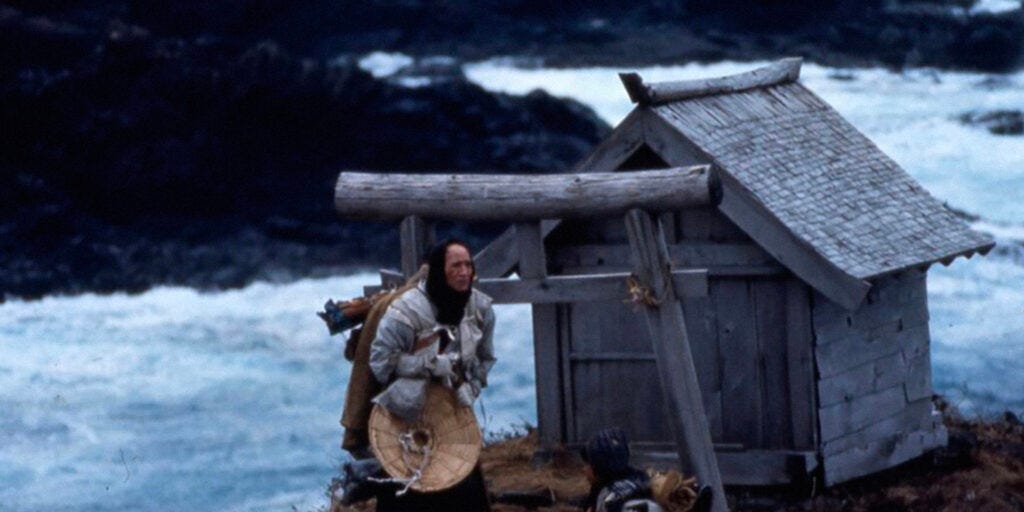
Closer to the truth of his appeal is found in an article by the critic Wendy Jones Nakanishi, who draws attention to both the political muzzling of the press in post-war Japan and the ramifications of its civil code which allowed individual journalists to be sued by the aggrieved subjects of their reporting. She believes this dynamic contributed to Matsumoto, a former journalist himself, using the detective novel as a more secure method of publishing investigative reporting. Whether that was his true motivation I do not know, but I feel her speculation captures something fundamental about his work. The slow pace of his novels is perhaps surprising in light of his huge commercial success, taking their time to establish what they are even about and admirably unafraid of audience boredom. His use of elliptical storytelling with such density of detail certainly feels more akin to investigative journalism than the narrative structures of fiction. In long form reporting dramatic stories really do revolve around fixating on and finding a small detail: a single name on a shell company, a letter which contradicts an official claim, an unexplained budget line. What at first seems like an absurd commitment to being obscure seems from this angle to capture something deeper.
Underlying Matsumoto's work too is the way the push of this dry realism battles with the pull of his earnest, almost idealistic belief in the power of hard work. His detectives are not defined by a Holmesian cunning, nor by the complexity or distinctiveness of their characterisations. In Matsumoto, solutions to the cases are found by tackling the same, seemingly intractable, problem over and over again until answers slowly reveal themselves. A commitment to persistence undaunted by a lack of progress or by the making of constant wrong turns. In A Quiet Place that means observing a character returning to the same suburban Tokyo street each day until the outlines of his recently deceased wife's double life slowly starts to become apparent. In Point Zero it's in its protagonist travelling to the country's rural north until the mystery of her husband's disappearance comes into view. Late into the book she realises that her dedication to the case has been so total that she hasn't seen any of the sights of her temporary home of Kanazawa. Inspector Imanishi meanwhile uses his own funds to finance his investigations far beyond the demands of his police job. He turns down wrong path after wrong path throughout his investigations, but he keeps on going regardless.
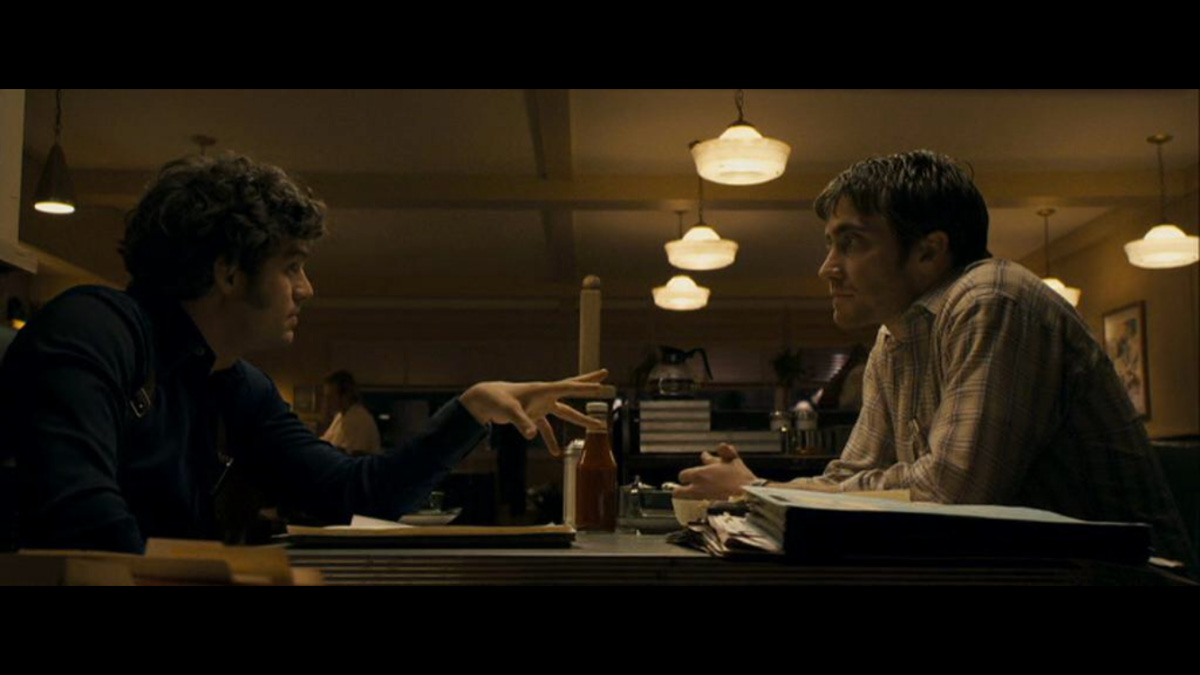
In David Fincher's film Zodiac, this level of obsession in criminal cases is treated as profoundly destructive, ruining the personal lives of its characters. Yet Matsumoto valorises it. The greatest punishment meted out in his translated work is to the high flying lawyer in Pro Bono who neglects to take on a young woman's tragic case because he is too pre-occupied with his own love affair. He failed to do the necessary work and is left broken and humiliated by the plot. The meandering of his mysteries almost create a Patrick Modiano-esque atmosphere, but whereas in the Frenchman's work you find that the more the characters learn, the further away from understanding they get, in Matsumoto, the underlying belief is that you really can get to the bottom of a mystery by trying again and again. His novels are full of things like numbered lists of pertinent evidence, which need to be looked over again and again. Functioning almost like revision notes. In fact the pleasure for me is akin to seeing a beautifully maintained set of revision notes, both in the diligence on display and the idea that all is needed really is a more effective and thorough organisation of the relevant ideas. Then everything will be okay.
Writing on the history of Japanese detective fiction, Lawrence Wong says that "If [Matsumoto] had a motto, it would be: If you work diligently the truth will forcibly reveal itself to you.". In the way he weaves this idea into the social issues he tackles he creates seductive fiction. Detective novels were banned in Japan during the Second World War as a distraction from the fascist war effort. Writing after the surrender and occupation in 1946, Yoshitaki Suzuki pondered the connection between this particular element of censorship and the country's military and political failure. He felt that people had needed to read detective novels to learn how to carefully analyse society, building in them a resistance that would allow the population to avoid the horrors they inflicted on the world in the middle of the 20th century. We know this cultural claim isn't really true of course, otherwise Richard Osman and Reverend Coles' enormous sales of cosy crime alone would lead Britain to a golden age. But it's nice to pick up his books and be gently convinced otherwise each time you read them, even if just for a moment.