on tragedy and absurdity in wang bing’s documentary epic tie xi qu: west of the tracks
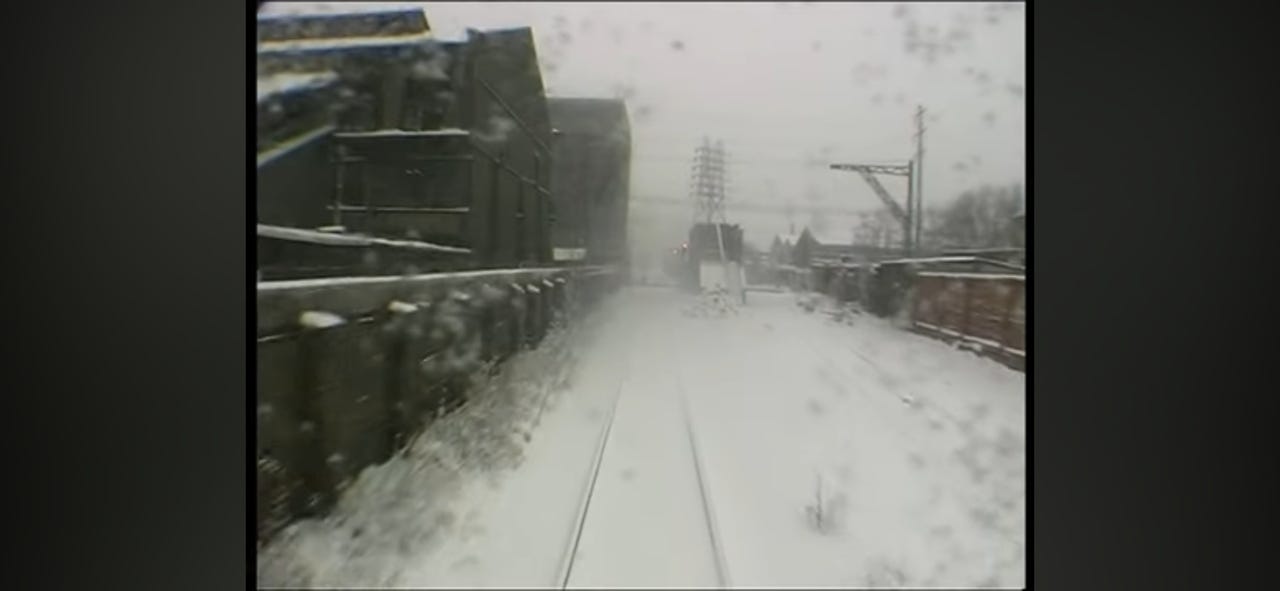
The opening shot of Tie Xi Qu: West of the Tracks looks out ahead from the front of a slow moving freight train crossing the vast Tiexi industrial district in Shenyang during a snowy winter. The only background noise for its seven minutes is the rattle of the train itself. Strangely hypnotic, its placement recalls the scene in Andrei Tarkovsky's classic STALKER, in which three men look out from a railway work car which slowly transitions them from a monochrome factory and into "the Zone" - a vivid, mysterious and ominous area where the laws of physics no longer apply. Here, though, the rails take us in the opposite direction. Out of our colourful lives and back into the factory, into what the critic Lu Xinyu describes as "another world, one that has already been destroyed: a ruin of industrial civilization".
The director Wang Bing became fascinated by Shenyang's immense abandoned factories during an assignment as a photography student. Borrowing a small digital camcorder in late 1999 to conduct a practice experiment, he befriended a group of freight railway workers who enabled him access across the Tiexi area. Despite never having shot a documentary before and barely even having seen any, Bing ended up shooting three hundred hours of footage across two years. It then took him another year to shape it into a sprawling 9 hour documentary, split into three sections called Rust, Remnants and Railways. Shenyang only has two alternating six-month long seasons according to one of the workers. As they cycle past, the camera, held by Bing at his chest, intimately observes the workers reactions to the demise of the smelting factories in which they work and the planned demolition of the associated residential housing area nearby in which they live.
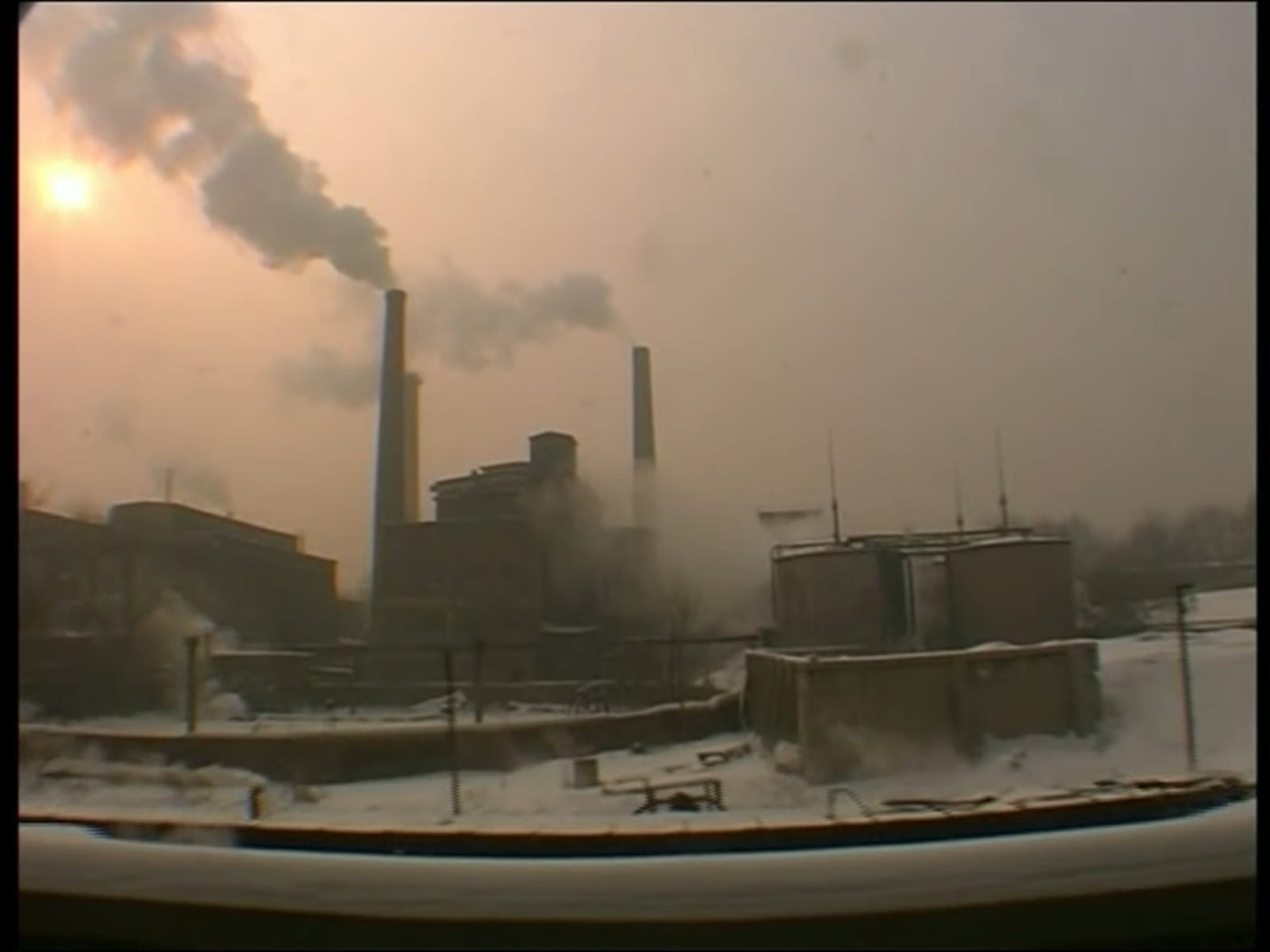
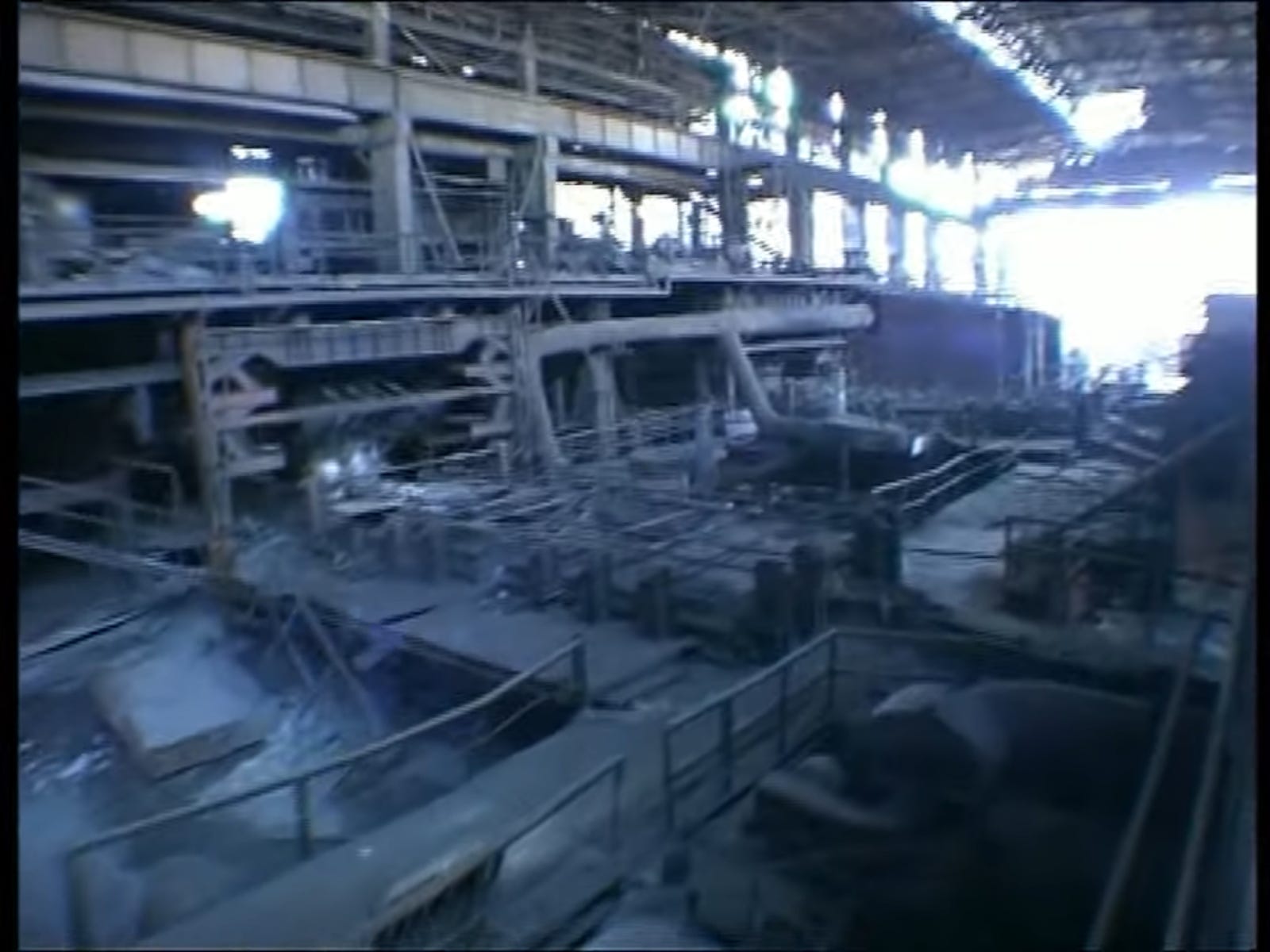
This elegiac context, along with the intimidating length, is responsible for much of the film's reputation. The first section focuses on images of these vast factories and the lives of the workers in them. It is often used to stand in for the film as a whole. The experience of watching functioning as a sort of pilgrimage to the gravestone of an era. A film where the main character isn't even expanded beyond an individual to a location or place so much as an entire economic system. Preserving on tape the final moment of collapse of the so-called "Iron Rice Bowl" model in which development would be guided by state owned heavy industry offering its male workers lifetime employment and guaranteed housing and pensions. A somber counterpoint to the more familiar narrative of China's dramatic economic revival since Deng Xiaoping initiated its transition to a market economy in the late 1970s.
The writer Ian Jack, looking at industrial Britain, has reflected on how the rise and fall of an entire social world took place within a few generations of his own family. Changing the world entirely before vanishing from view. Not just that no-one even does his fathers job anymore in this country, but no-one even knows what it even was. Yet in China this process was accelerated even faster, Tiexi emerging from the creation of modern workers' communities in the early 1950s and then fully retreating just half a century later. Across what was for some of the people in this film, one full working life. Throughout the film there's this deep melancholy sense of the powerlessness of the individual labourer in the grand sweep of history.
Wang Bing's refusal to sign up to creative restrictions means his films have never been officially screened in China. You can't find the film on any of the major streaming platforms here either but it has been uploaded with English subtitles to Youtube. The world of early 2000s Shenyang is now punctuated by unskippable adverts for holidays, productivity software and yoghurts, as if a studio executive had demanded a cut that rams meaning into your head with ironic juxtaposition. Perhaps it was watching it with this artificial framing that helped reinforce a strand of the film that is as important to it as the post-socialist lament.
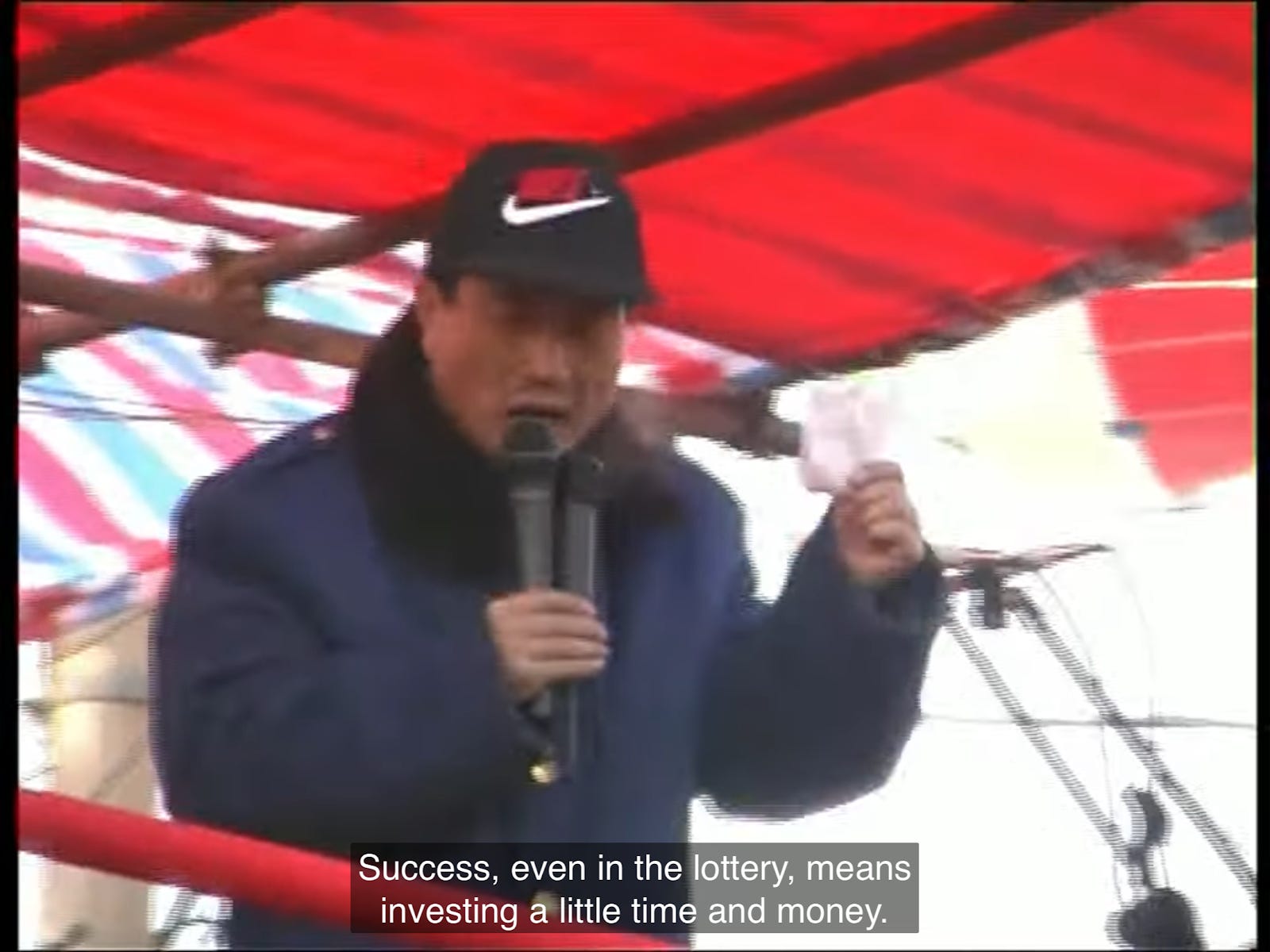
Unlike the atmospheric train journey, the second section, titled "Remnants", opens with a comic scene seemingly disconnected from the rest of its narrative. It covers a lottery being run as part of a "Municipal Fairground" in the area's central park. A man on a stage holding a microphone excitedly offers a crowd of visitors a chance to win new cars and consumer electronics, bizarrely insisting that the values of hard work, talent and dedication are just as important in the lottery as the rest of life. Interviewing a winner in between live entertainment to drum up crowds, it is revealed that they had borrowed money merely to be able to afford a ticket. After it's over, we see people scavenging dropped tickets on the ground, on the off chance they find a lost winner.
It's a nice vignette symbolising the emerging values of the new free market China struggling to be born out of the old. Its absurdity reminded me of a short story by Yan Lianke published in the most recent special issue of Granta called "Black Pig Hair, White Pig Hair". The story is set in an impoverished rural village in Mao's China and follows the days after the local mayor accidentally ran over a young man in his car. Everyone in the community is well aware that agreeing to lie and claim that they in fact hit the young man with their tractor will see them and their family rewarded, after a short mandatory punishment. It's a great opportunity in a life with very few. The story then covers the intense debate about who should get the golden ticket to do it. Between these two eras, between the grand turns of history, there's continuity in the struggle to live within a system that is fundamentally ridiculous. Survival and absurdity going hand in hand.
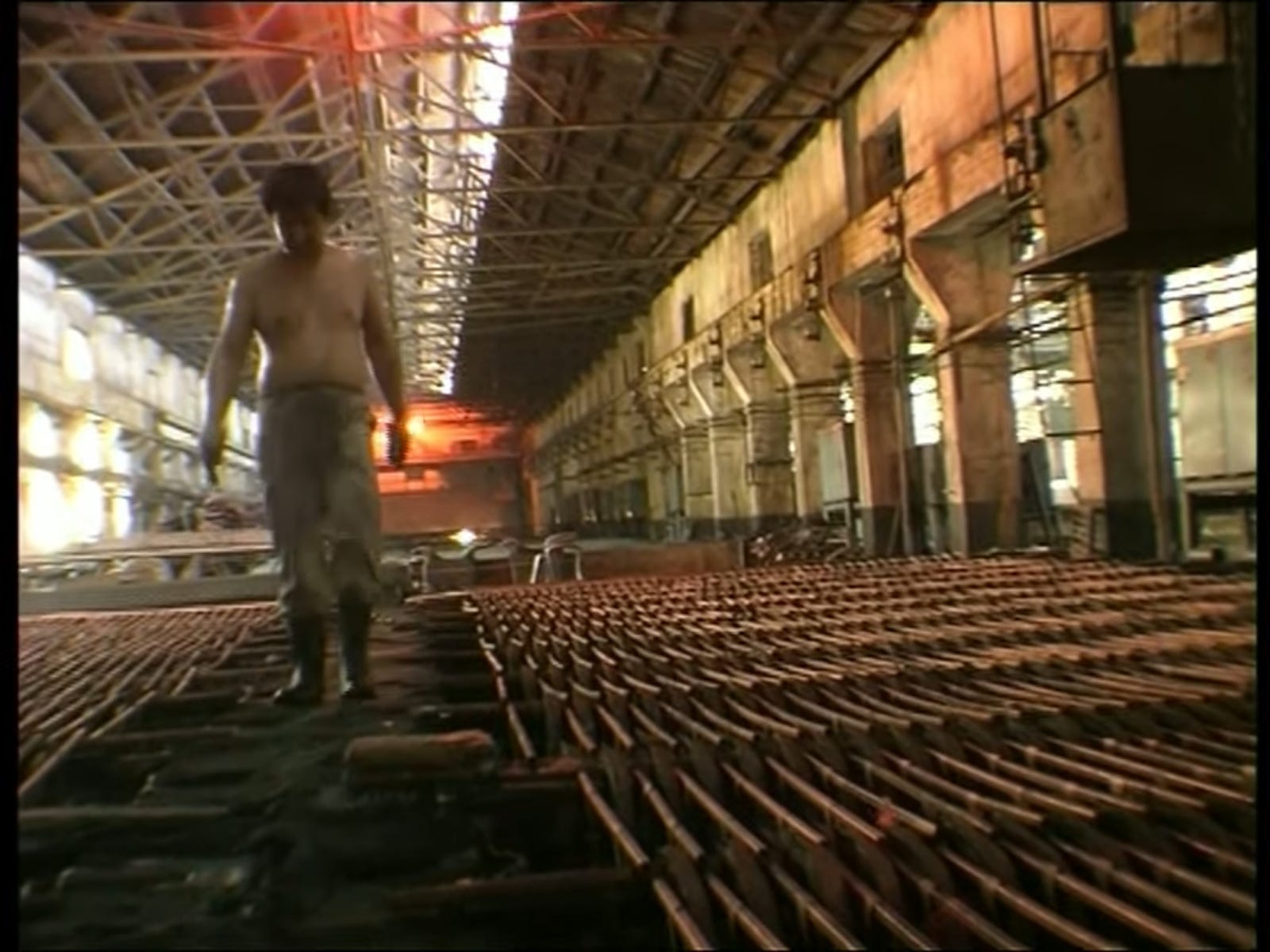
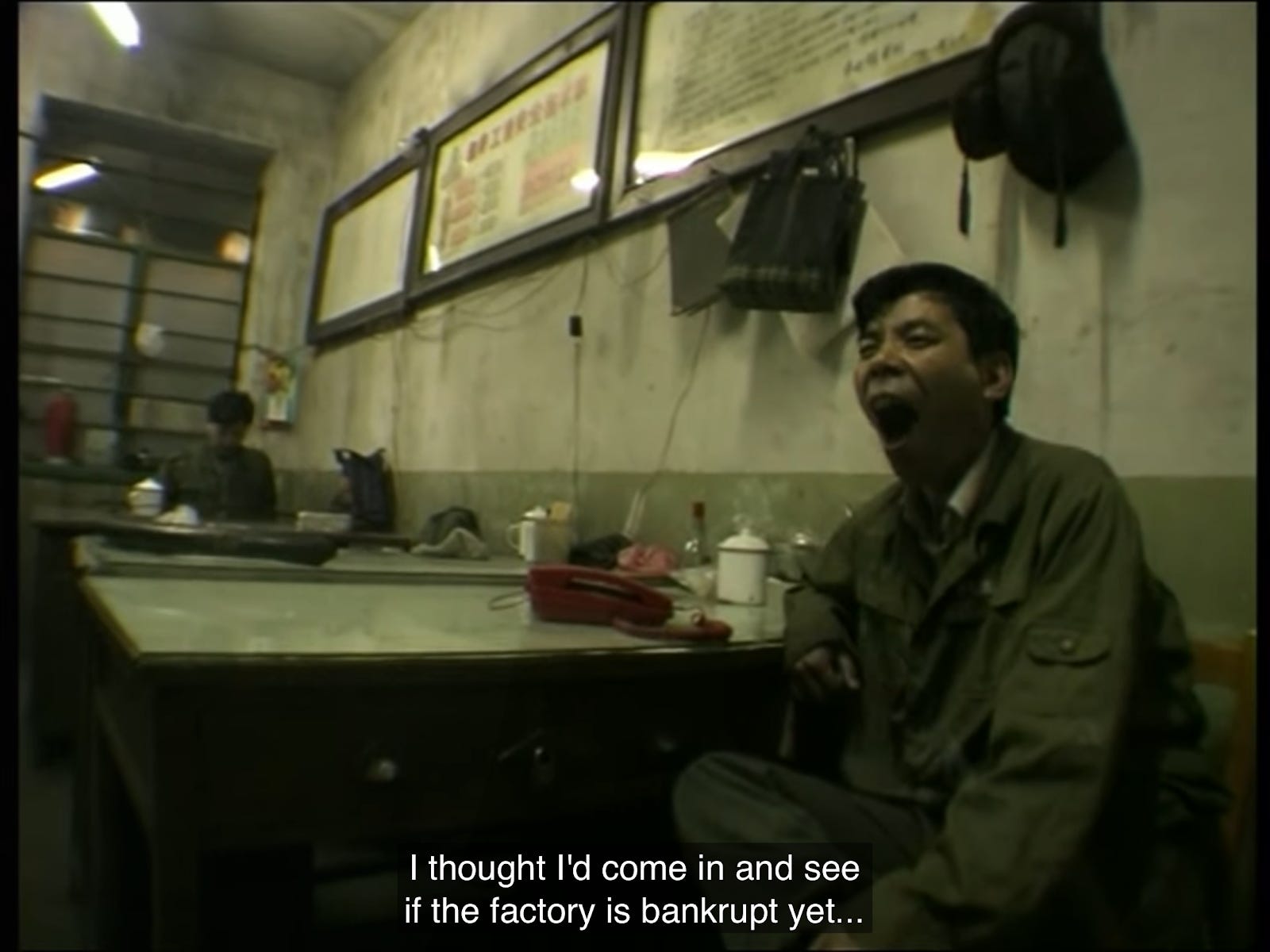
In the first part, "Rust", everyone in the factory is aware of their own imminent fate. Some prefer to while away the time waiting for the inevitable with games of cards, chess or billiards in the various factory break rooms. Others by going round and round discussing the current state of the factory, the slow decline in pay and work, the ways it has been let down by poor management, corruption at every stage and neglect from a regime that one worker argues "should rename themselves the republicans". Often these arguments are prosecuted by men passing fully naked back from the showers, unable to avoid getting sucked into a nearby argument about who has let everyone down, how long they've been unpaid for or estimating how indebted the factory is. Meanwhile, to avoid detection, one of the factory bosses deliberately arrives camouflaged by a run down car to announce the closure of another section before immediately driving away before anyone could protest. The dominant conversation thus becomes about how to steal past security the remaining tools and raw materials without getting caught and before others get to them.
In a rare moment of drama a caption explains that there has been a dangerous leak in the blast furnace and we are treated to deadpan scenes of workers standing around awkwardly as molten liquid leaks across the factory floor. They have told the administrators, but they don't seem to care much. Everyone just looks a bit confused. The molten liquid continues to spread.
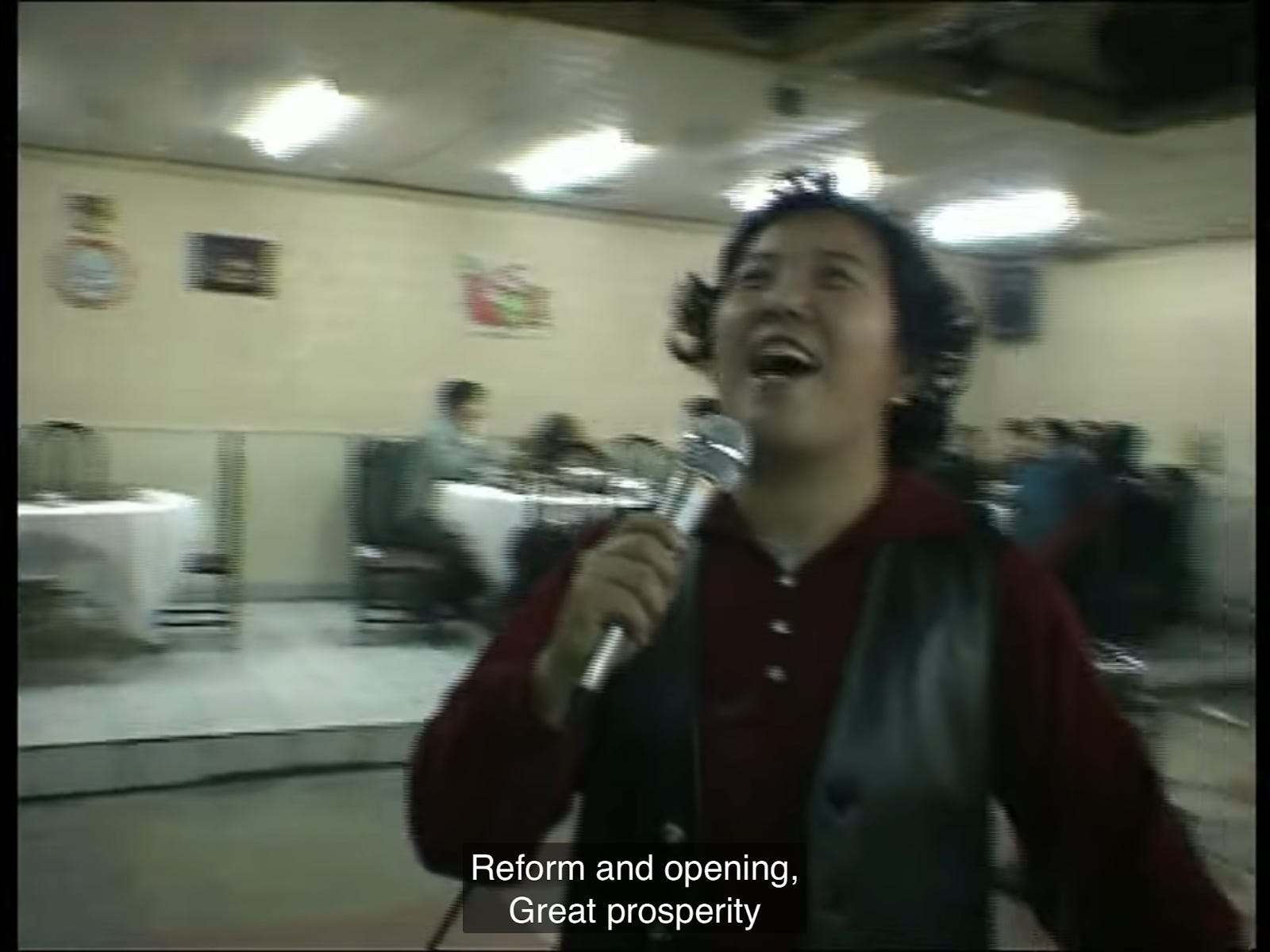
At one point an accountant explains that the factory has been bankrupt for two years but the city is limited from above to how many bankruptcies it is allowed to permit each year so has had to wait. He tries to bring out the two separate account books, representing the real and the fake numbers, from behind him before being hastily warned from off-camera not to show them. At a staff karaoke night a woman sings along to a patriotic song about how "reform and opening up leads to a grand new age". Meanwhile an administrative worker behind her bemoans all the ways she is having to shift money around from their pension commitments to cover regular salaries. She, unusually, advocates for the virtues of privatisation, though more out of exhaustion than ideological commitment. To her it presents a formalisation of the values already endemic in the absurd dying system, bringing in a sense of honesty about how bad things had become. The only thing everyone agrees on however, is that regardless they will have no say in what is happening.
The final scenes of Rust take place in a purgatorial hospital on the outskirts of the city, where the laid off lead factory workers have to stay for a month while doctors give them injections for the poisoning they have undergone over the last year. Groups of men sit on chairs together watching porn tapes on a TV. Some go fishing in a lake without any fish, where one of the workers drowns. They argue about whether it was an accident or a suicide, whether it was appropriate for the factory to hold off telling the family, and criticise how disrespectfully low level the boss eventually informing them was. They wish the man had just stayed in and played cards.
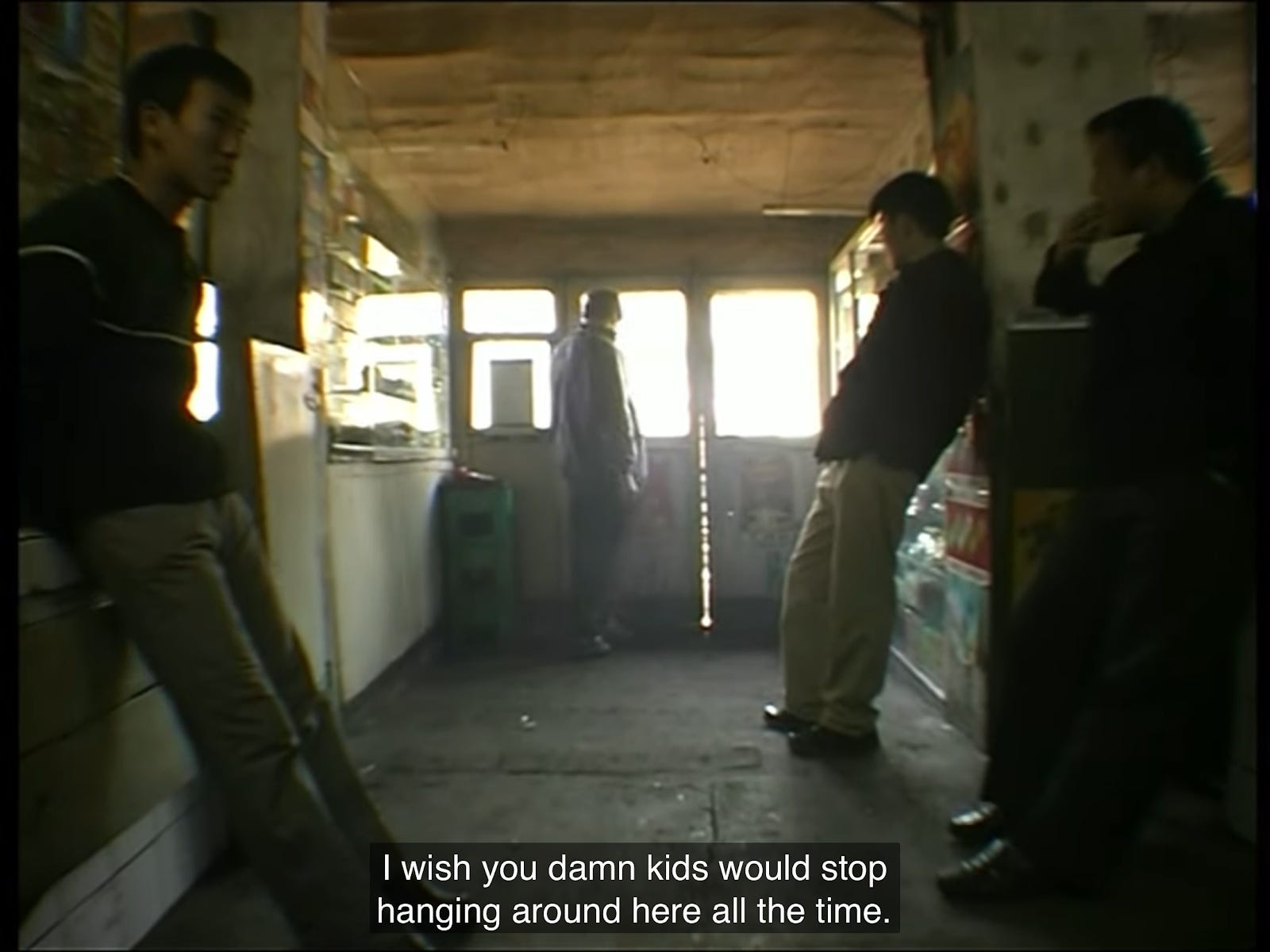
Whereas the first section of the film is a collective without distinct characters, "Remnants" takes us into the world of a seventeen year old called "Bobo". He lives with his parents in a rickety neighbourhood called Rainbow Row which accommodates many of the workers in the nearby factory district. Bobo is cynical about his own hopes for any job, instead spending all his time hanging out in a local grocery store in his signature bulky suit. None of the workers in the store have been paid in months. They discuss a deal to bribe someone who is willing to let them buy cargo trucks at a heavy discount from a closed rubber factory and sell them on. Bobo, however, is more interested in trying to secure a date with Zhang "Nana" who doesn't seem to like him very much. Possibly because he once stabbed her with a pencil at school. As he doesn't have any money he concocts a scheme to borrow a friend's flowers to surprise Nana with, before returning later when she is sufficiently charmed. It doesn't work. Still, luckily for Bobo another person in the group has written a love letter to another girl and everyone immediately moves on to making fun of them for "trying to be an intellectual".
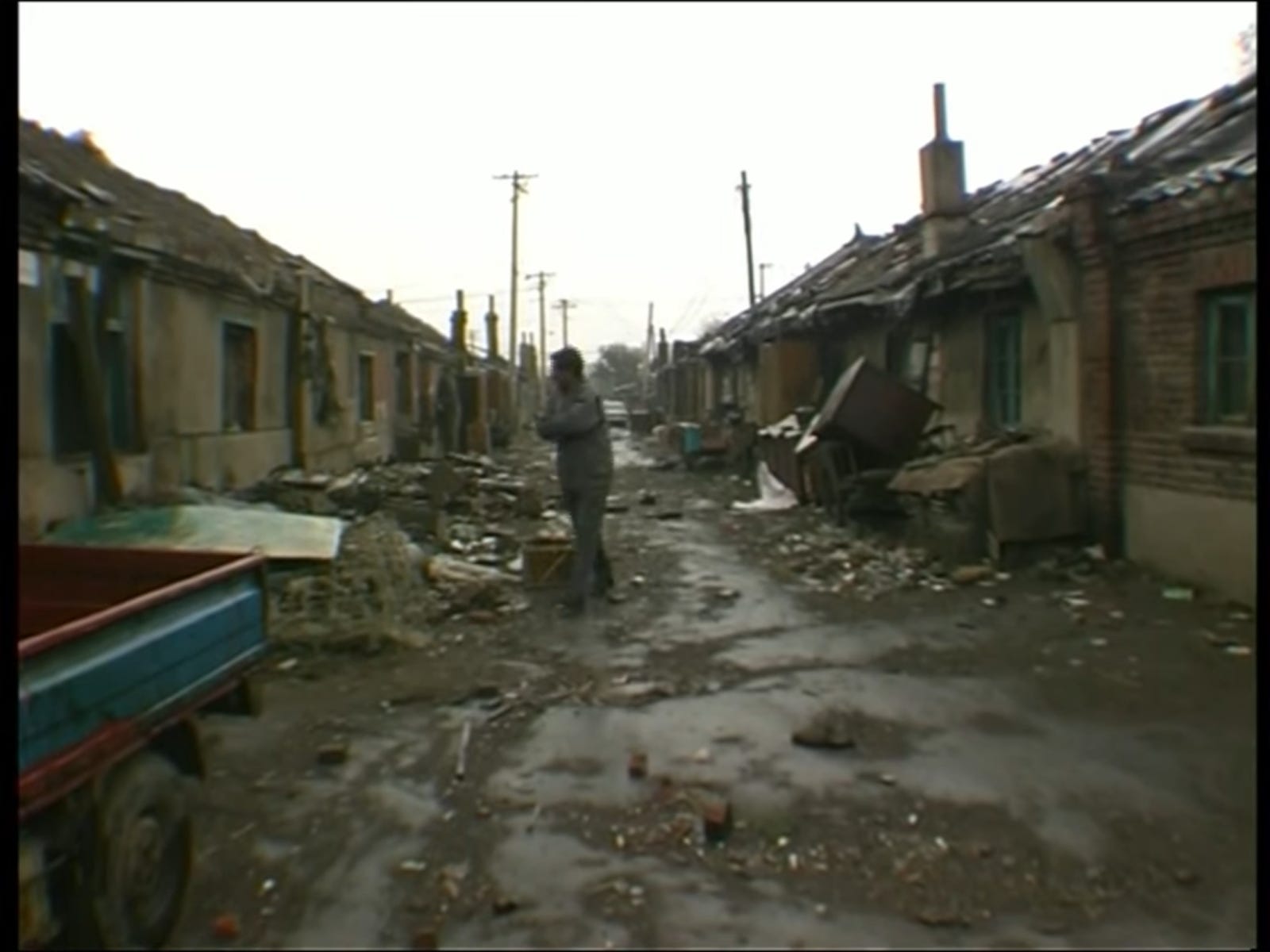
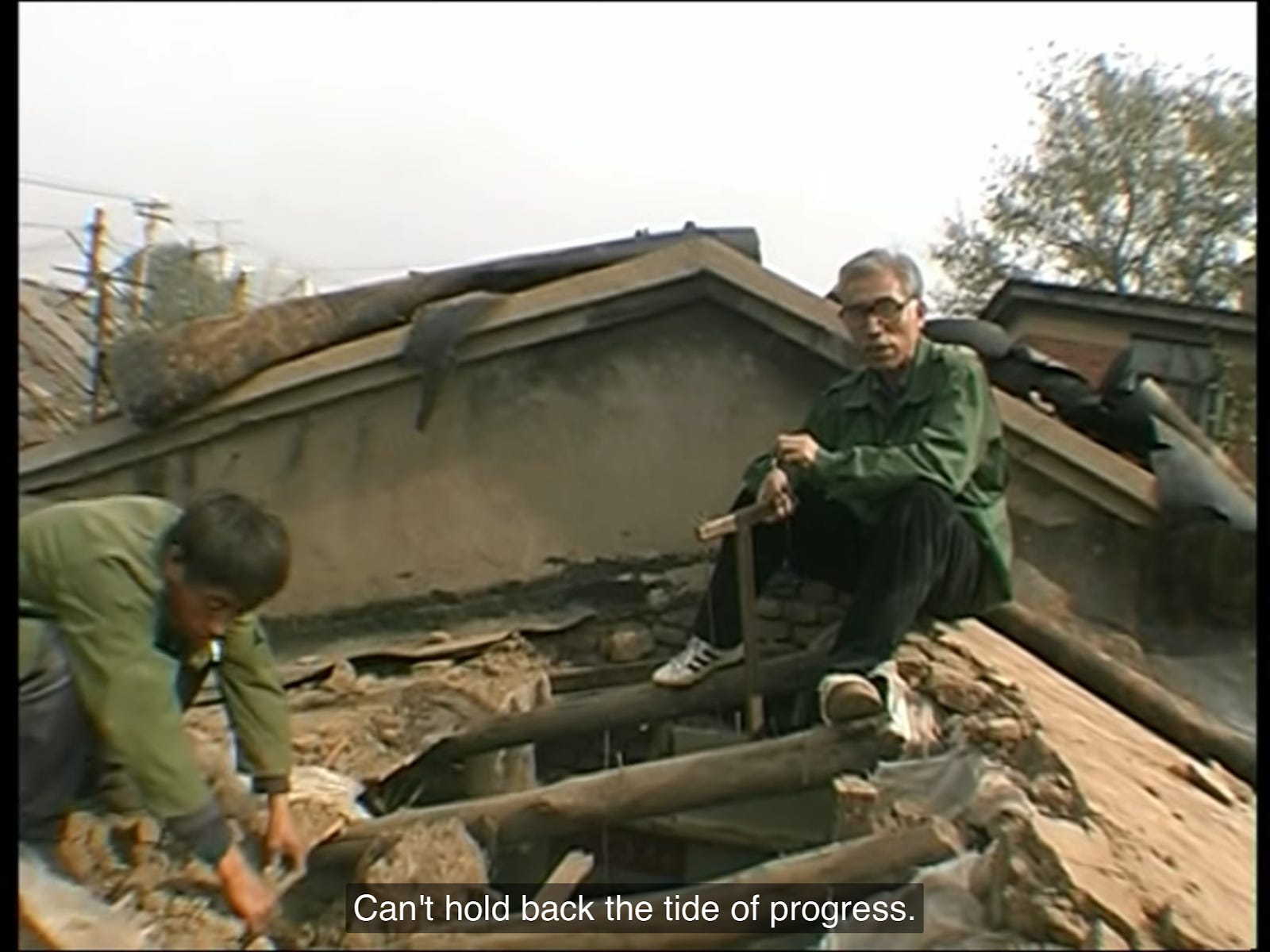
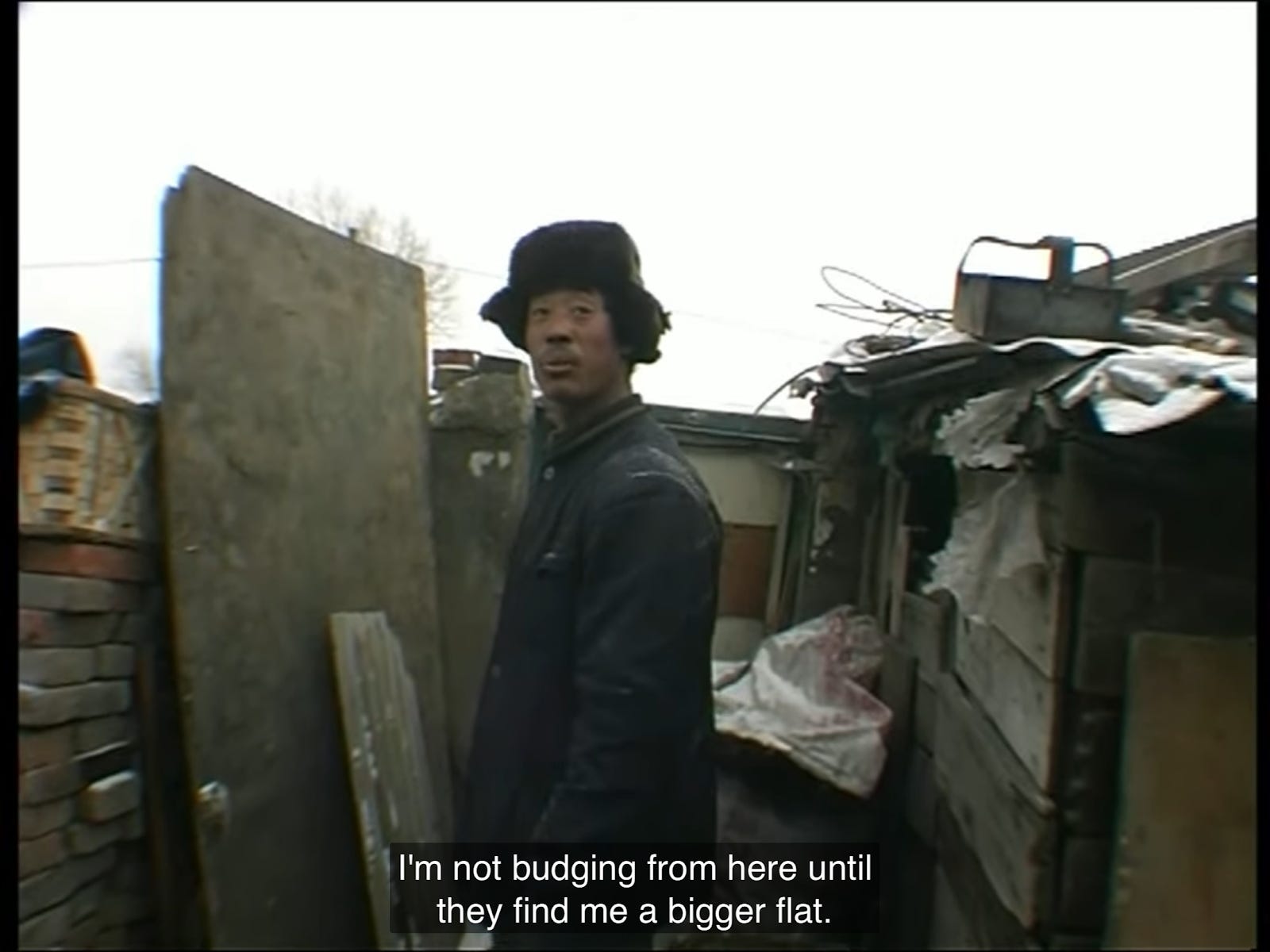
The section zooms out in its perspective as it is announced that Rainbow Row will be demolished and the inhabitants will have to apply for relocation. It becomes a collective drama again. There are some who are excited about a new adventure but most are sharply against it. There's debates over the methodologies for compensation schemes and whether the government can even do this. Rumours spread about how much smaller the new flats will be. Many decide to stay, either because it is their home, because they have slipped outside of the residence permit system, or in hopes that sustained resistance will give them leverage for a bigger new flat. A bitter member of the latter group notes that everyone said they would do the same, that they would resist the developer together, then quietly took the offer behind everyone else's backs. When the state cuts off water and electricity connections as winter sets in again much of the area has already been physically dismantled, either by those trying to sell on building materials as scrap or by agents of the incoming developers. The remnants are left sitting in candlelight, knitting, arguing about their quality of life or sharing rumours about who has left recently. The factory closures now devastating everyone, one of Bobo's friends' parents describes their kids' lives as "already wasted", bemoaning how he has no ability to bribe anyone for a better job for them.
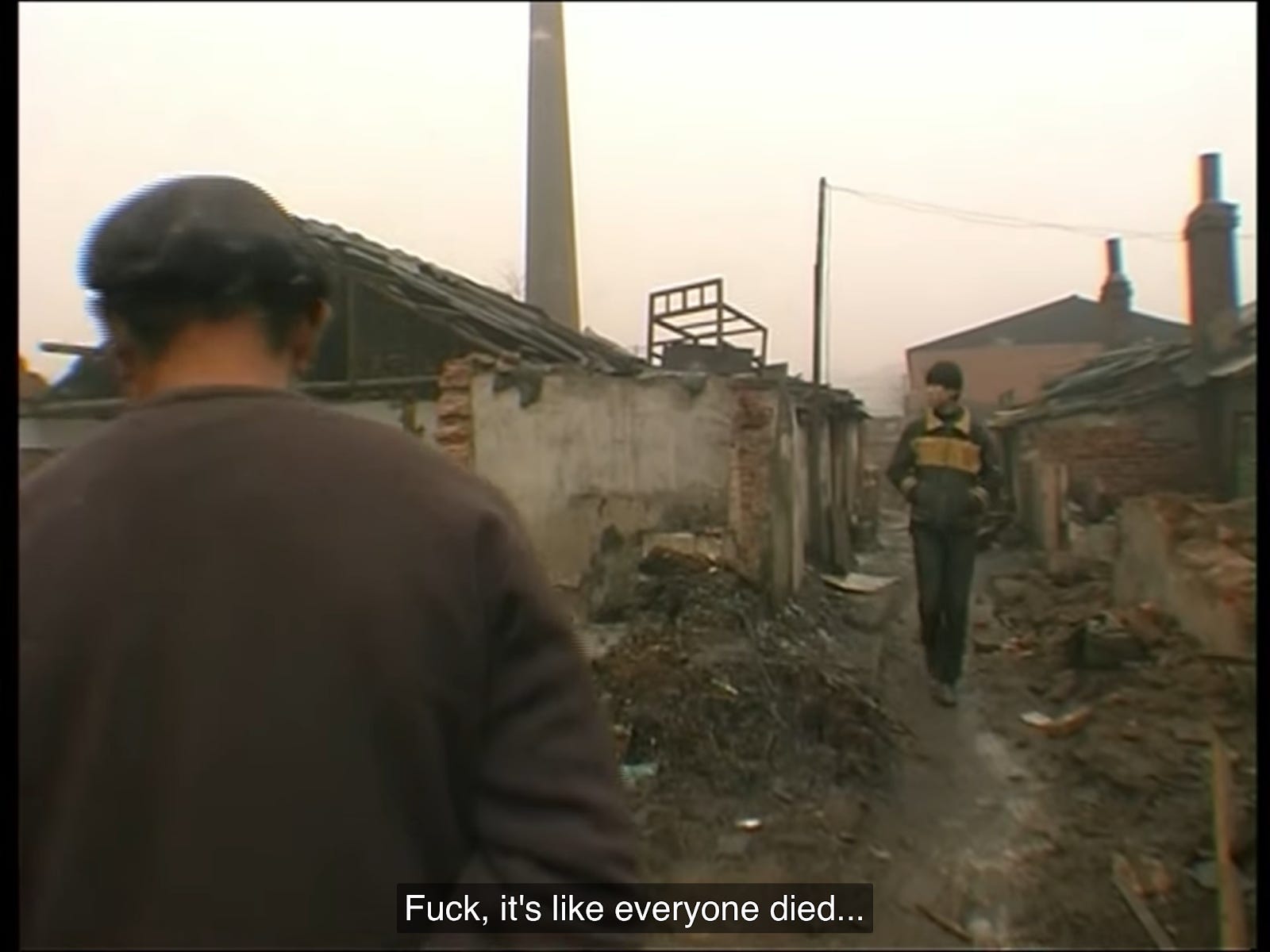
With the area now almost deserted, we see one man try and organise a mahjong game only to discover that everyone that would normally play has already gone. Those left walk like ghosts through the frozen ruins of a community that was vibrant two hours ago when Bobo was planning his romantic escapades. We never see where anyone went. Whether they were vindicated in their gamble. We are left just to feel their absence.
The final section "Rails", sees Bing repaying the workers who helped facilitate the film as they supply dwindling deliveries of raw materials to the same factories. Much of it feels like a less successful re-tread of the break room scenes from Rust but in train carriages. The opening train scene already captures the vastness of the district, there's no need for so many returns to travelling shots. Then there's a torturously long scene capturing the argument over whether the railway workers had the right to move someone's grandmother's cart off the track. Yet within this section are the film's most memorable and powerful scenes. The perspective zooms in further on a father/son relationship, between Du Yang and Old Du, whose poverty forces them to live in a tiny, freezing makeshift accommodation in the freight yard. Reduced to odd jobs and selling stolen coal as the factories require fewer and fewer deliveries. Old Du describes his life as a sort of grand cosmic joke - shunned in Mao's China for being a property owner, and vanishing in Reform China for being too poor. He is a cheerful character despite the dual loss of his status and marriage, proudly displaying his dog to the camera. Popular with the workers who hide his living quarters and make fun of him for looking like either the president of Indonesia or Lenin.
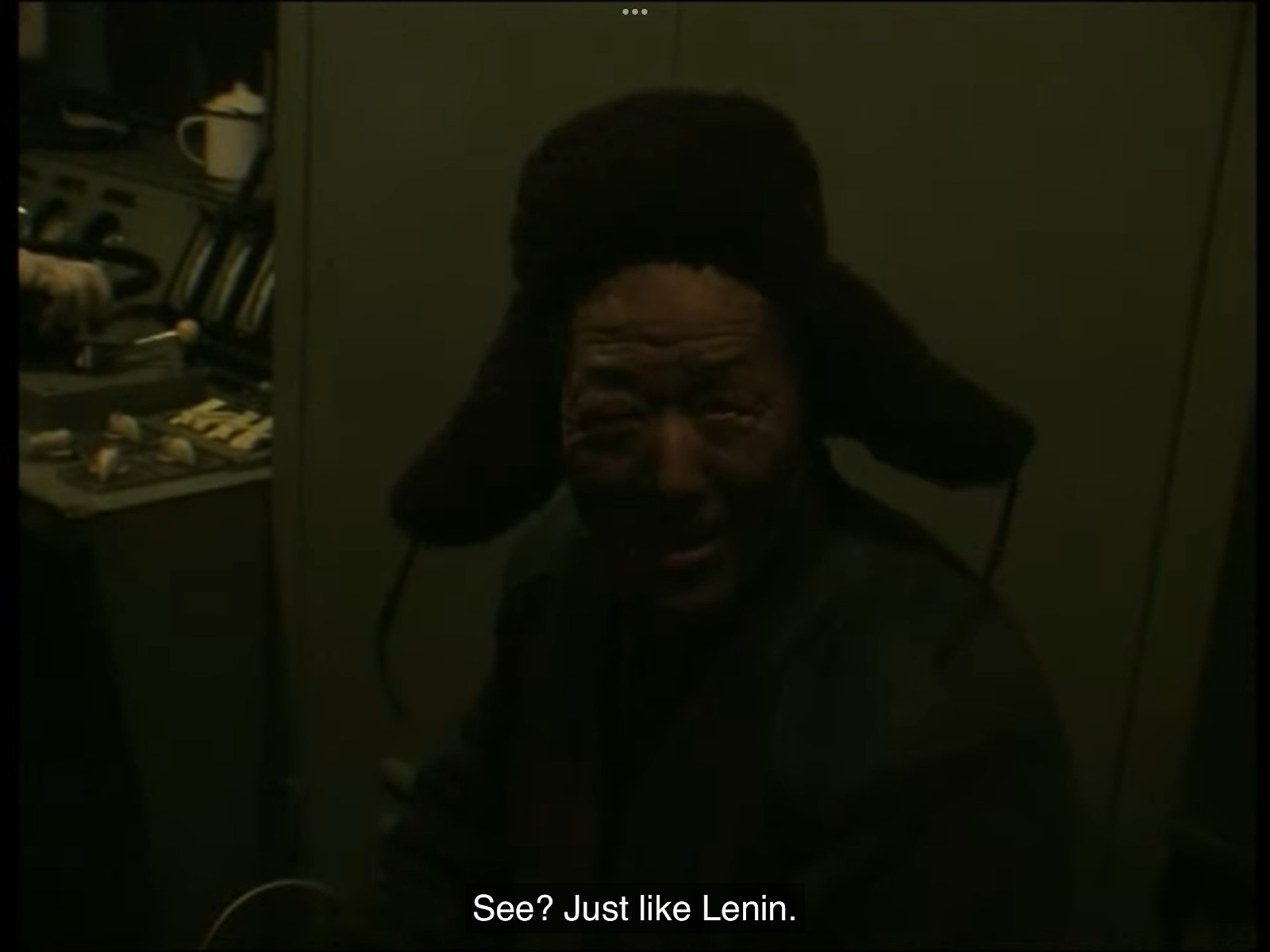
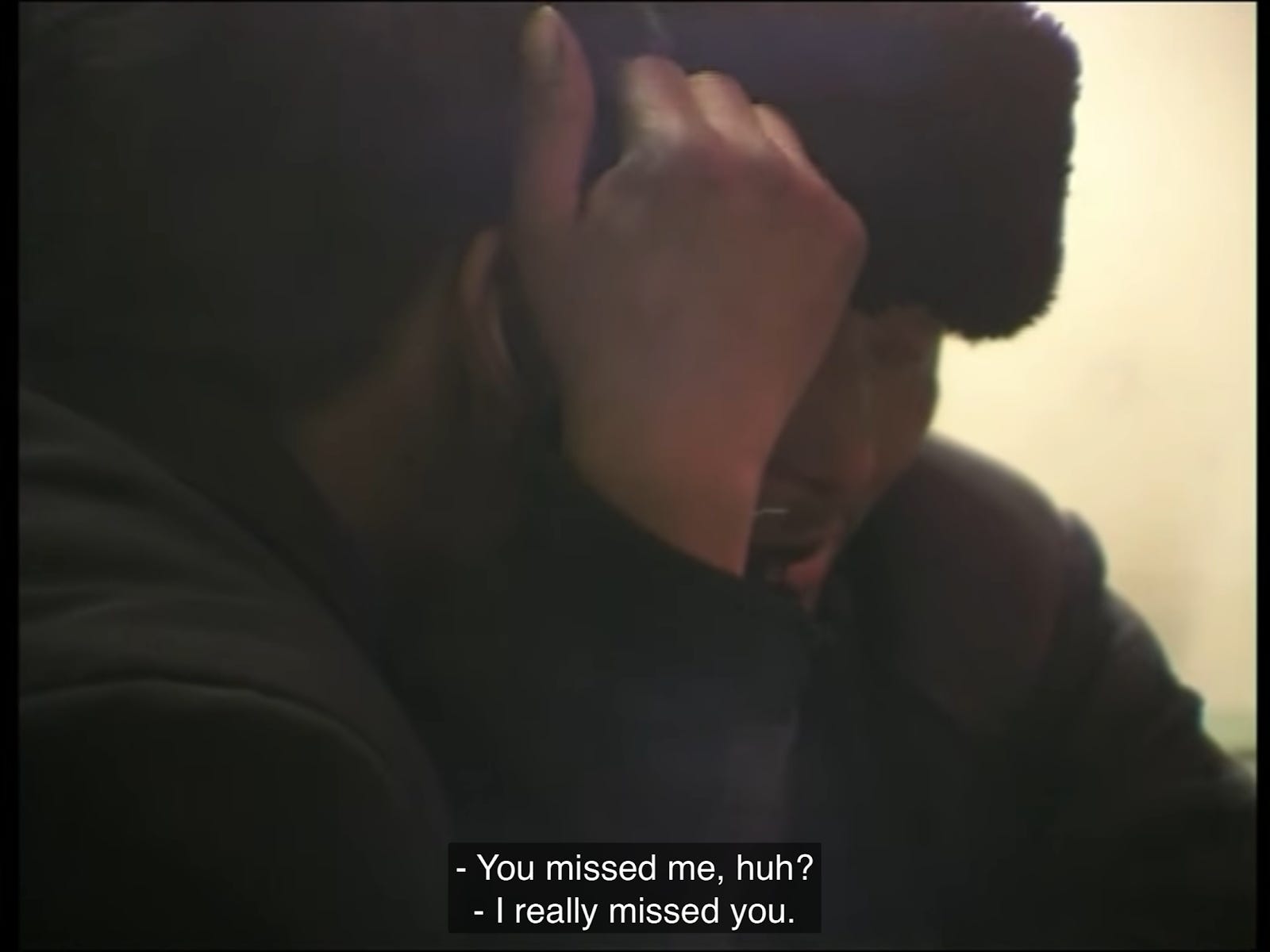
Du Yang however struggles with his life, often seen walking around the freight yard alone in silence. He's told that his father has been arrested for stealing coal and taken to a detention facility outside of the city. He shows the camera photos of "how our family used to be", before bursting into tears. When his father has not returned in a week he travels out to demand answers, only to discover his father was released just before he arrived. Reunited at a celebratory dinner, Du Yang collapses emotionally. Swinging from initial outpours of gratitude at his fathers return into overwhelming anger and frustration. Flinging himself ridiculously across the restaurant and trying to hit Old Du as everyone around tries desperately to calm him and avoid a scene. An extraordinary moment of cinema. An almost unbearable release of pure human Tragedy and absurdity in perfect balance.
Wang Bing has reflected that when he was making Tie Xi Qu: West of the Tracks he was filled with pride for being a radical artist and intellectual, but as time goes by he sees the ordinary people in his films as those who really make contributions to society. Thankfully he had already made a film that does their experience justice.
